

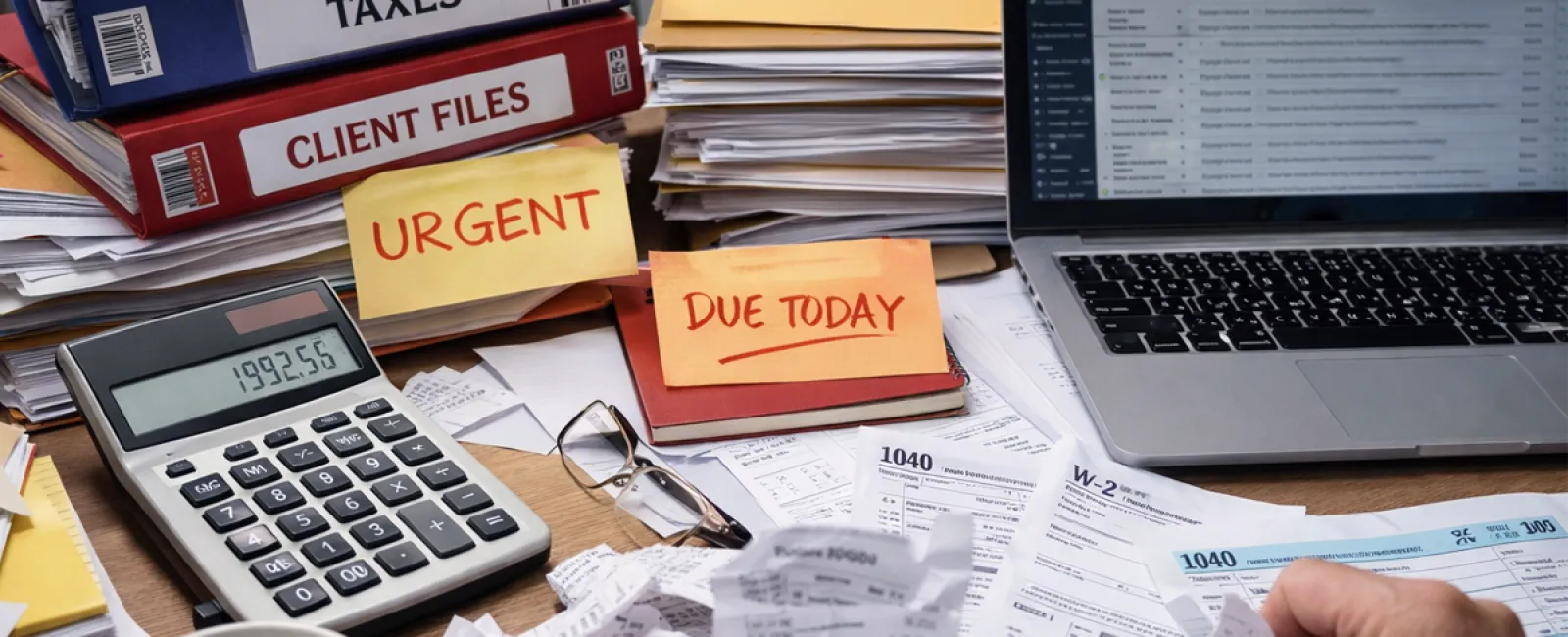
It's March, the peak of tax season.
Your accountant is overwhelmed, your bookkeeper is hustling, and deadlines are fast approaching. Emails flood your inbox, faster than anyone can respond.
Everyone's heads are down, focused solely on pushing through the busiest month.
This scenario is familiar to you.
Unfortunately, it's also well-known to cybercriminals.
Security experts report a notable surge in phishing attacks during tax season, with March experiencing nearly a 28% increase in tax-related scam emails compared to slower months. These fraudulent emails are subtle and crafted to mimic routine business communications, targeting professionals at their most distracted.
This timing isn't accidental.
It's strategic.
Here's what to expect and four easy strategies to ensure your business stays protected.
The Strain on the Supply Chain
What many overlook is this:
Hackers aren't focusing solely on accounting firms.
They exploit the chaos enveloping the entire network.
During tax season:
- Clients hurriedly send sensitive documents
- Employees skip essential verification steps to meet demand
- Informal requests like "Just send me the file" replace caution
- Verification protocols are often bypassed due to workload pressure
The entire ecosystem accelerates.
And faster pace leads to errors.
Cyber attackers don't pursue meticulous, slow-paced companies.
They target those overwhelmed with activity.
March is undeniably frantic.
Recognizing These Attacks
This isn't fiction.
They come in emails nearly indistinguishable from your usual messages.
- An email "from your accountant" requesting you resend W-2s due to a supposed error
- A vendor's message claiming updated banking information needing immediate attention
- A DocuSign request urging you to sign a tax document "today"
- An urgent plea "from your CEO" traveling and requiring swift assistance
None of these raise alarms at first glance.
They seem like typical March business communications.
This subtlety makes them effective.
Why Busy Professionals Fall for Them
It's not about negligence.
It's about natural human tendencies.
Under information overload and tight deadlines, people skim, assume, and respond instinctively.
Scammers exploit this perfectly.
Their emails are crafted for those moving too quickly to spot subtle inconsistencies. They don't rely on recklessness — they count on your busy schedule.
And in March, nearly everyone is busy.
Four Easy Habits to Avoid Being an Easy Mark
The great news: no complex software or expensive security teams are needed to cut your risk.
Just adopt a few mindful routines during high-stress times.
1. Always confirm payment changes by phone
If an email indicates a vendor's banking details have changed, avoid replying to that message.
Instead, call a trusted number you already have to verify the information.
This simple habit wards off some of the costliest business scams.
2. Take your time with urgent requests for sensitive info
Urgency should signal a moment to pause, not rush.
If someone demands W-2s, tax forms, or financial files "immediately," verify before sending.
A legitimate sender won't object to a brief delay. A scammer will.
3. Double-check "urgent" emails through another channel
If an email stresses urgency, confirm it with a call, text, or internal chat.
This quick second check can halt fraudulent actions.
True emergencies withstand a two-minute verification; fake ones do not.
4. Give your team a brief scam awareness reminder
This week, remind your staff that tax season is prime scam time.
Encourage slowing down, double-checking, and asking questions when something seems suspicious.
This small mindset shift can prevent significant problems later.
Final Thoughts
Tax season is stressful enough without falling victim to scams.
These cyberattacks aren't complicated — they're perfectly timed.
They depend on rushed decisions.
They exploit assumptions.
They prey on the pressure everyone feels to get through March.
You don't need to overhaul your systems to stay safe.
Just slow down when it counts and verify urgent requests carefully.
Often, that's enough.
A Quick Check-In for Your Busy Season
Your business might already follow solid security habits — if so, fantastic.
If tax season typically forces everyone into reactive mode, or if you're uncertain how your team handles urgent, high-pressure requests, consider a free Discovery Call to evaluate.
No threats. No pressure. Just straightforward advice on whether simple habits could save you from major headaches this season.
If this doesn't describe your business, please forward this to someone who might benefit.
Click here or give us a call at (802) 331-1900 to schedule your free Discovery Call.